LABORATORY
THE SHOW IN THREE PERFORMANCES
Working on Macbeth, performed by three companies, each is tasked with writing and performing the story from a particular point of view. The plot of the three stories is connected by the storyline of Shakespeare’s original text, which can be summarized in the following three sequences:
COMPANY A - BERLIN
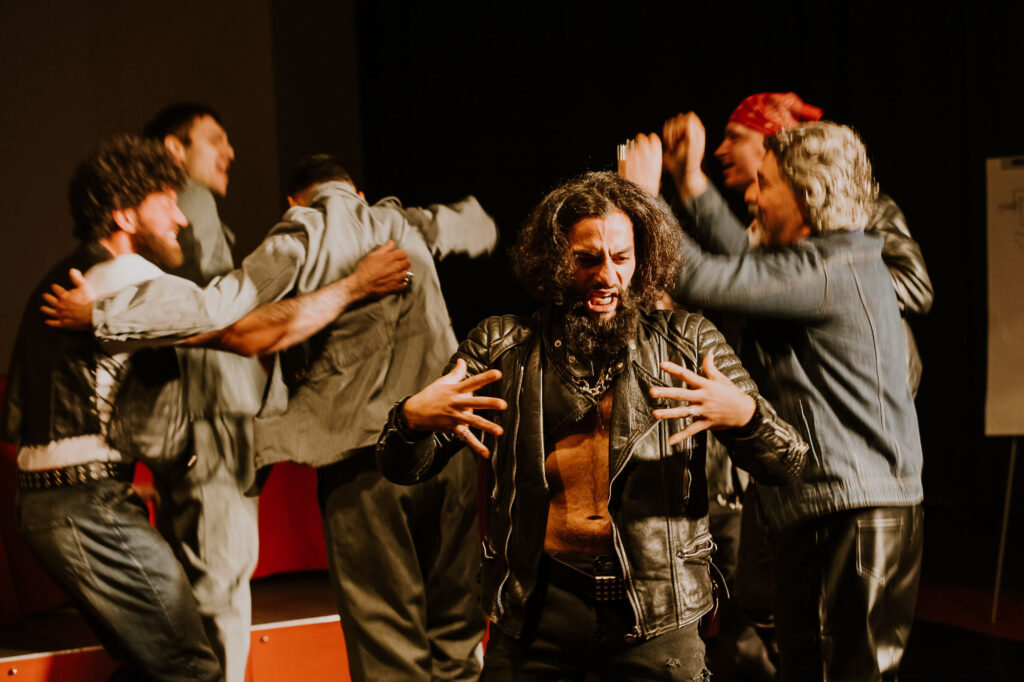
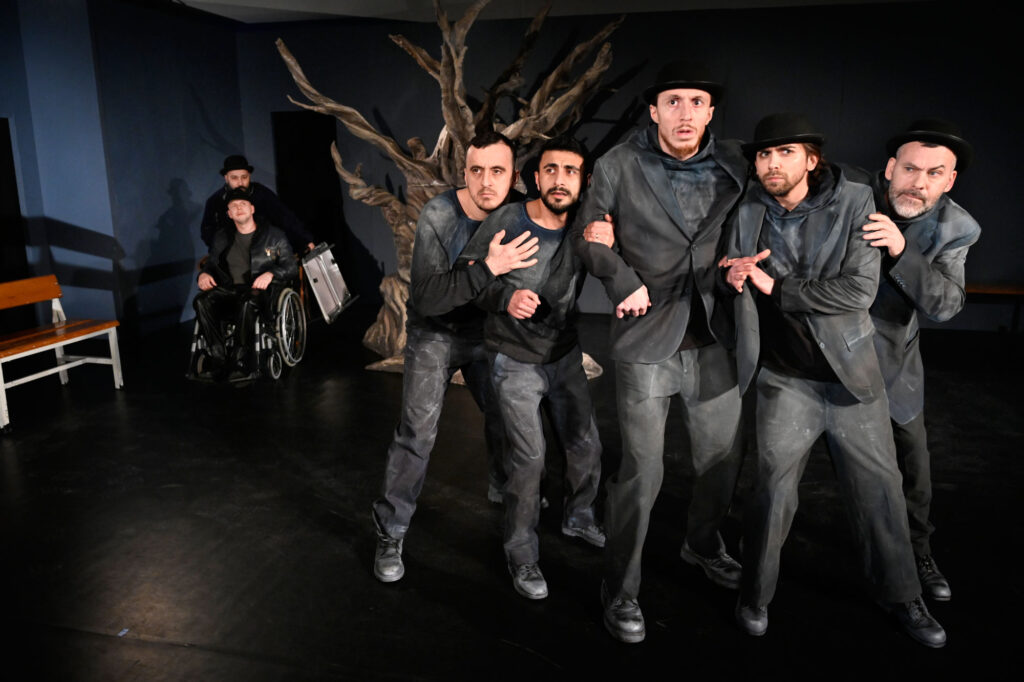
In a men’s prison, tells the story from Macbeth’s point of view. This includes his victory over the king’s enemies, his magical illusion, and the growth of an unbridled political ambition. The murder of the king and his immediate nervous breakdown. Then, little by little, his consolidation of a madness of power: the murders of his friends, and the resulting feelings of guilt, the delusions of omnipotence, and the final sacrifice.
COMPANY B - NAPLES
Composed of women from a women’s prison, tells the story from Lady Macbeth’s point of view: the joy of her husband’s victory, her ease in deceiving herself in her rise to power and her manipulation of her husband. Then, as the crimes and bloodshed around her increase, and especially with the weight of the extermination of Duncan’s family and young children, comes her psychological breakdown, and finally, suicide.
COMPANY C - ATHENS
From a men’s prison for young men, tells the story from the point of view of Macbeth’s antagonists. These include his partner Banquo, who refuses to resort to treachery and is murdered by him. The noble Duncan, who tries to restore legality by speaking with the king’s sons and sees his family exterminated. Finally, the king’s sons, who understand the plot and flee to organize the reconquest, which ultimately brings about Macbeth’s just death.
THE ORIGINAL TEXT - Why Shakespeare?
Because his stories offer a couple of essential advantages:
A. They are often stories with a consolidated and effective structure, perhaps drawn from previous literary traditions. The narrative device can therefore be easily shared by groups of authors and actors who are far apart.
B. They are recognizable, both for their characters and for the plot and conflicts to which the story leads, by most citizens of the European community, to whose enormous audience the film, and possible live performances, will speak.
WHICH SHAKESPEARE. Regarding the choice of Macbeth, the goal is to create a multipolar text that gives narrative autonomy to each of the three groups, but that can bring the characters together in a collective story, linear or parallel, useful for editing a film with a single narrative line, a bit like Kurosawa’s Rashomon.The writing method must involve the inmates, in a sort of adaptation in which the conflicts of Shakespeare’s characters take over the personal experiences of the participants.